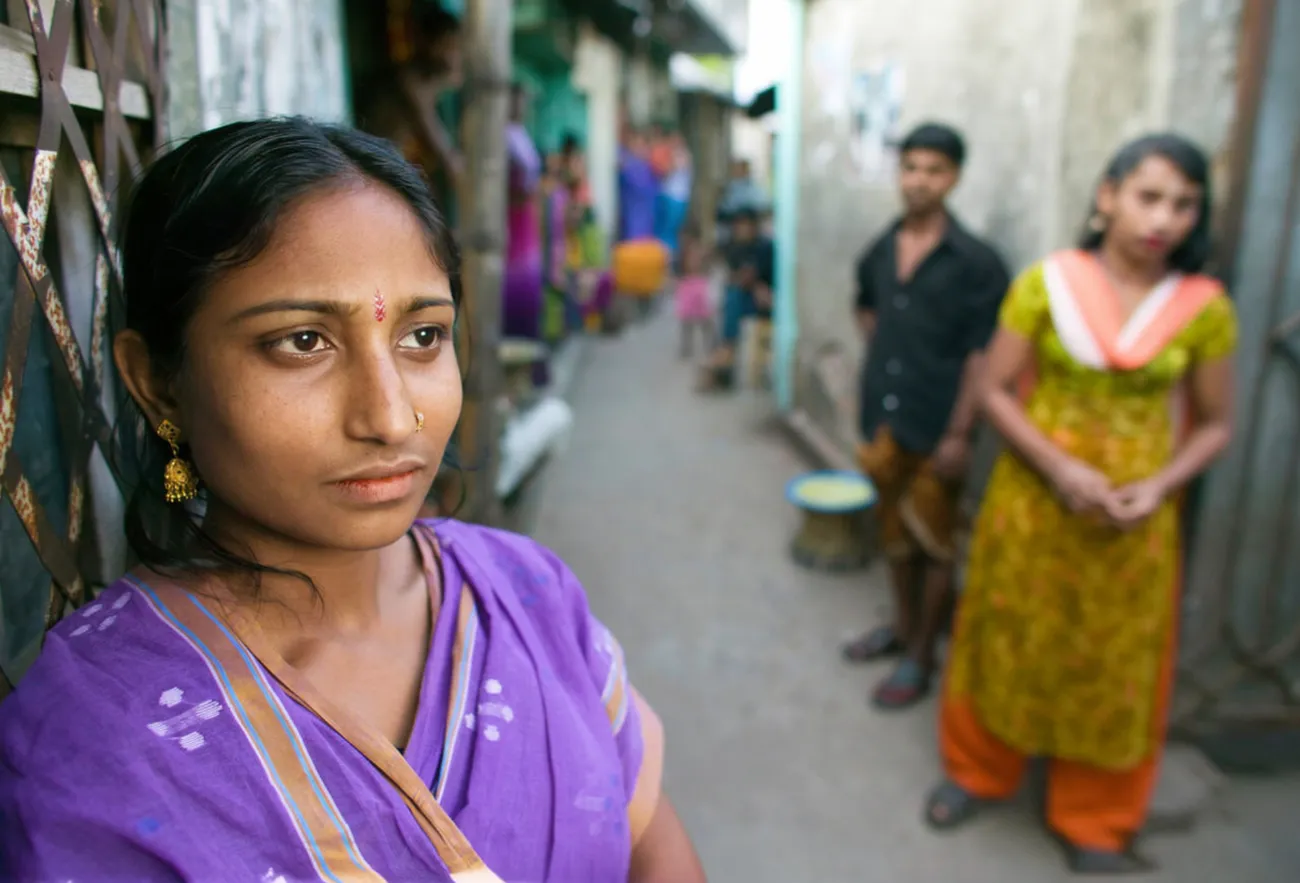
The thick scent of heavy perfume mixes with the salty breeze off the river. Brightly coloured saris clash with the rusted corrugated-tin walls. Laughter echoes down narrow, mud-slicked alleys, masking the generational secrets kept within.
This is the sensory landscape of the historic brothels in Bangladesh.
Bangladesh presents a rare legal anomaly in South Asia. It stands as one of the very few Muslim-majority nations where sex work is legally recognised. Behind this legal framework lies a deeply complex, parallel world. Bangladesh is home to several sprawling, self-contained “brothel villages” that have existed for generations. To truly understand this fragile ecosystem, one must look beyond the surface and examine its historical roots, the contradictory legal landscape, the daily realities of residents, and the ongoing fight for human dignity.
Historical Genesis: Feudal Roots and Maritime Trade Networks
To accurately comprehend why these walled enclaves exist as autonomous entities today, one must trace their lineage back to the British Colonial Era and the preceding Zamindari (feudal landlord) system of Bengal. The geography of Bangladesh’s brothels is not random. It maps perfectly onto the historic transit routes of the 19th and 20th centuries.
During the Zamindari era, affluent landlords frequently patronised elite dancers and courtesans, known across the subcontinent as Baijis. As feudal structures collapsed under colonial administrative shifts, economic forces displaced many of these women to the rapidly expanding margins of the British trade infrastructure. They congregated primarily around major riverine ports and railway junctions.
Simultaneously, the British colonial administration sought to regulate and confine commercial sex to specific zones. They established these areas near military cantonments and commercial ports to service sailors, traders, and labourers. This forced spatial segregation laid the foundational blueprints for the self-contained “villages” observed today. Over the last two centuries, these settlements evolved from crude roadside encampments into fortified social ecosystems. Mothers passed down maternal lineages, survival strategies, and an insular localised culture to their daughters.
The Geography of the Brothels: Cities Within Cities
Unlike the hidden, scattered red-light districts found in western global cities, the most prominent hubs function as fully realised, walled-off villages. They operate with their own internal economies, localised shops, and strict social hierarchies.
1. Daulatdia: The Megabrothel
Located in the Rajbari District near a massive, chaotic river ferry terminal where the Padma (Ganges) and Jamuna rivers meet, Daulatdia is the largest brothel village in Bangladesh. Experts frequently cite it as one of the largest self-contained brothels in the entire world.
- Scale: It houses an estimated 1,300 to 2,000 women and girls.
- Traffic: It serves between 3,000 and 5,000 clients every day. These visitors include transit workers, cross-river truck drivers, and travellers delayed at the ferry port.
- Environment: It is a bewildering labyrinth of narrow alleys, mud-and-tin shacks, and vibrant market stalls.
- Infrastructure Dynamics: Daulatdia operates as a hyper-dense economic centre. The construction of the monumental Padma Bridge significantly altered regional transit patterns. Yet, the Daulatdia junction remains a critical bottleneck for heavy logistics vehicles and transport trucks crossing from the southwestern districts to Dhaka. The permanence of this infrastructure ensures a continuous influx of vulnerable floating labourers who constitute the primary consumer base of the brothel.
2. Kandapara: The Oldest Stronghold
Situated in the Tangail District, Kandapara is Bangladesh’s oldest active brothel, with a history spanning more than 200 years.
- The 2014 Demolition: In 2014, local religious and political groups forcibly demolished the entire village, displacing over 1,000 women overnight.
- The Return: Demonstrating remarkable resilience, the workers, backed by local human rights NGOs, fought back legally. They argued that destroying their homes stripped them of their basic livelihood, leading to the landmark legal re-establishment of the brothel village.
- Socio-Spatial Design: Today, Kandapara maintains a fortress-like architectural boundary. High walls enclose the community, and guards monitor the entry gates. Inside these walls, a complete micro-society thrives independent of the external municipality, complete with tea stalls, pharmacies, and informal arbitration courts.
3. Regional Hubs and Disappearing Footprints
Other historic settlements still exist across the country, each tied to a specific geographical industrial asset:
- Vanished Footprints: Conversely, some major historic hubs have vanished entirely due to state intervention or urban gentrification. The government permanently shut down the massive Tanbazar brothel in Narayanganj—historically tied to the lucrative jute river trade—in 1999. Similarly, authorities cleared away the historic Sahebpara brothel in Chittagong, which once welcomed maritime sailors at Majhir Ghat, forcing its population into precarious “floating” or hotel-based sex work across urban centres.
- Rathkhola (Faridpur): A dense urban pocket deep within Faridpur’s agricultural heartland. It operates in close alignment with regional trade syndicates and seasonal crop marketplaces.
- Banishanta (Khulna): Situated precariously on an island on the bank of the Pashur River. Workers established this community in 1950, alongside the development of the Mongla seaport, to serve international sailors from Europe and across Asia. Today, Banishanta faces an existential crisis driven by climate change. Extreme riverbank erosion along the Pashur River causes large portions of the island to slip into the water, forcing managing sex workers into inland vulnerability.
The Legal Paradox: Free Will vs Criminal Law
A striking contradiction between individual rights and criminal statutes defines the legal status of sex work in Bangladesh.
- The Individual Right: Under Bangladeshi law, any adult female over the age of 18 can legally sell sex. To do so, she must sign and submit a legal affidavit before a magistrate. This document explicitly declares that she is entering the profession voluntarily and because she cannot find any other viable means of employment.
- The Anti-Brothel Laws: Simultaneously, the country’s Suppression of Immoral Traffic Act states that running a brothel, procuring individuals for sex work, or living off the earnings of another person’s sex work is illegal.
This creates a “quasi-legal” grey zone. Individual workers hold legal certificates allowing them to practice, yet the physical villages they live and work in technically violate the penal code. In practice, local law enforcement, municipal syndicates, and political structures tolerate the settlements, choosing to regulate, tax, and monitor them from a distance.
This landscape was codified following the landmark 2000 High Court verdict (State vs Bangladesh Human Rights Implementation Organisation). The High Court ruled that the constitutional rights to life, livelihood, and equal legal protection apply unequivocally to sex workers. Thus, evicting them without a comprehensive state rehabilitation program constitutes an illegal deprivation of livelihood.
The Harsh Reality: Human Cost and Exploitation
While the legal right to work exists on paper, the social reality inside the walls of these villages is often dictated by systemic poverty, deep social stigma, and criminal exploitation.
1. Trafficking and Debt Bondage
The absolute prevalence of human trafficking creates a severe crisis facing these communities. A significant portion of the girls entering the brothels are minors or highly vulnerable women fleeing domestic abuse, rural climate displacement, or severe economic distress. Traffickers deceive many by promising lucrative jobs in garment factories in Dhaka or stable marriages.
Once inside the perimeter, a Sardernee (a female madam) takes strict financial control of the new arrivals. The madam instantly burdens the newcomer with an artificial, highly inflated “debt” for her food, housing, clothing, and the bribe paid to traffickers. This locks her into absolute debt bondage. During this period—which can last for years—the madam denies the girl freedom of movement, strips her of cash flow, and forbids her from leaving the village borders until she deems the debt cleared.
2. Underage Workers and Chemical Abuse
Despite the clear legal threshold of 18 years old set by the judiciary, forged birth certificates and a lack of strict enforcement mean that child exploitation remains a pervasive issue. Madams frequently give young girls, some as young as 12 to 14, harmful doses of Oradexon. This is a powerful dexamethasone steroid typically used by farmers to fatten cattle before markets. In the brothels, madams administer it to young girls to induce rapid water retention and weight gain. They want to make the girls appear older, healthier, and more physically mature to clients, which causes severe, irreversible long-term health damage, including liver failure, severe osteoporosis, and metabolic dependency.
3. Absolute Social Stigma and Marginalisation
Women in the brothels face profound social isolation. They are largely cut off from the mainstream banking sector due to a lack of traditional residential addresses or professional validation, making them highly vulnerable to theft and cash extortion. They are excluded from standard public healthcare systems and formal corporate employment.
This isolation extends tragically to their children. Deep-seated institutional prejudice frequently denies children raised within the brothels entry into local public schools. This ensures that poverty and social marginalisation remain cyclical across generations.
Shifting Tides: The Fight for Rights and Dignity
Despite these systemic barriers, the narrative surrounding the historic brothels in Bangladesh is slowly shifting. The women are transitioning from silent, invisible victims into highly organised, legally literate advocates.
- Dignity in Death: For decades, local religious leaders denied deceased sex workers formal Islamic burial rites due to the perceived impurity of their profession. Communities routinely denied them cemetery access, throwing their bodies directly into rivers or burying them in unmarked riverbeds under the cover of night. In 2020, following an intensive advocacy campaign at the Daulatdia brothel, religious authorities and local law enforcement performed the first-ever formal Islamic funeral prayers (Janazah) for a deceased sex worker. This historic milestone established a precedent for basic human dignity, ensuring proper religious burials across registered settlements.
- Grassroots Labour Unions: Residents have formed independent internal committees and collaborated with human rights groups to advocate for occupational safety, fair pricing, and protection from police extortion. These collectives provide a mutual defence framework against violent clients and local criminal syndicates.
- Securing Legality for the Next Generation: Historically, children born in brothels could not secure official birth certificates because they could not name a legal father. This lack of documentation left them legally stateless, barring them from public high schools, from applying for passports, and from formal employment. NGOs fought a monumental battle to change local registration policies. Today, Bangladeshi mothers can register their children using their own names exclusively, granting the next generation access to national ID cards and public education.
Conclusion
The brothel villages of Bangladesh are a stark reminder of how history, poverty, and law intersect. They exist as autonomous zones born out of necessity and survival. While legal recognition offers a layer of protection from total eradication, true progress requires dismantling the trafficking networks, protecting minors, and ensuring that the children born within these walls have a clear, uninhibited path out of the shadows. Understanding this complex socio-legal landscape is a crucial step toward recognising the profound human resilience that thrives even in the most marginalised corners of the delta.
Disclaimer: This article provides general educational and historical information regarding the socio-legal framework of registered brothels in Bangladesh. It does not constitute legal or human rights counselling.
Travel with Purpose, Respect, and Deeper Insight
At Panorama Bangladesh, we believe that true travel means looking beyond the postcards to understand the real, complex, and resilient soul of a nation. Our private, custom-made journeys are designed for conscientious travellers who want to experience the authentic living history, heritage, and cultural triumphs of South Asia responsibly.
We ensure that our tours fully respect local communities, never support exploitative tourism, and directly empower local guides and artisans with fair, transparent pay.