
There are countries you visit.
Then there are countries you experience.
Bangladesh belongs to the second category.
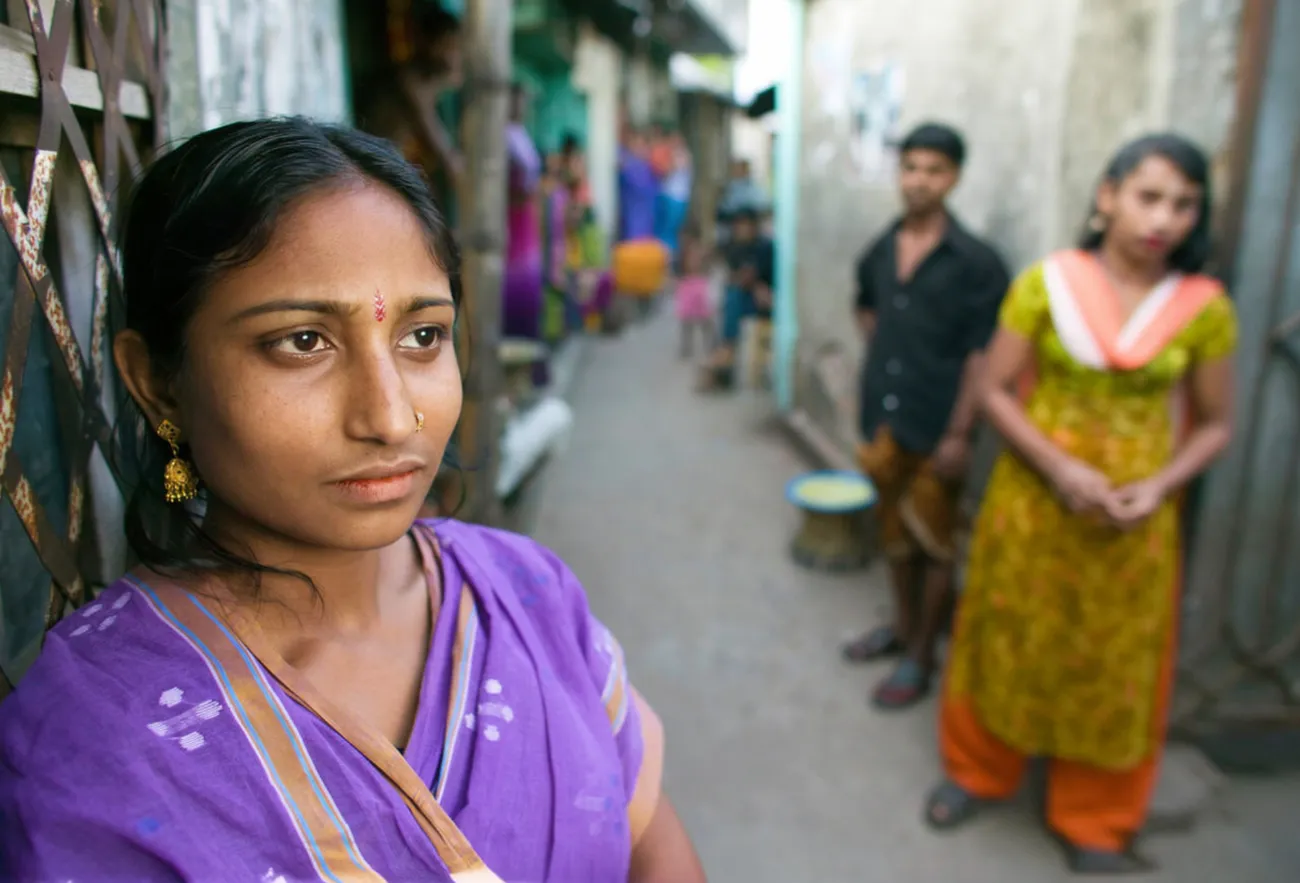
Most travellers know little about Bangladesh before they arrive. Many imagine a densely populated country hidden behind headlines, never realising that beyond the busy cities lies one of Asia’s last truly undiscovered travel destinations. In this land, ancient civilisations flourished, mighty rivers shape everyday life, wildlife still roams untouched forests, and smiling strangers welcome visitors with genuine warmth.
This is not a destination designed for mass tourism.
It is a country that rewards curiosity.
For twenty-four unforgettable days, you’ll journey through landscapes that constantly transform before your eyes. One morning begins among emerald tea plantations covered in soft mist. The next finds you navigating peaceful canals lined with floating markets. Days later, you’re quietly drifting through the mysterious waterways of the Sundarbans, searching for signs of the elusive Royal Bengal Tiger. Soon after, you’re standing beneath thousand-year-old Buddhist monasteries, walking through forgotten Hindu temple cities, exploring magnificent Mughal architecture, and ending your adventure beside the endless blue waters of the Bay of Bengal.
This is Bangladesh in its purest form.
A destination where every region tells a completely different story.
Why Bangladesh Is One of Asia’s Best-Kept Secrets
Unlike many destinations where tourism has reshaped local life, Bangladesh remains wonderfully authentic.
Life unfolds naturally.
Farmers still harvest rice by hand.
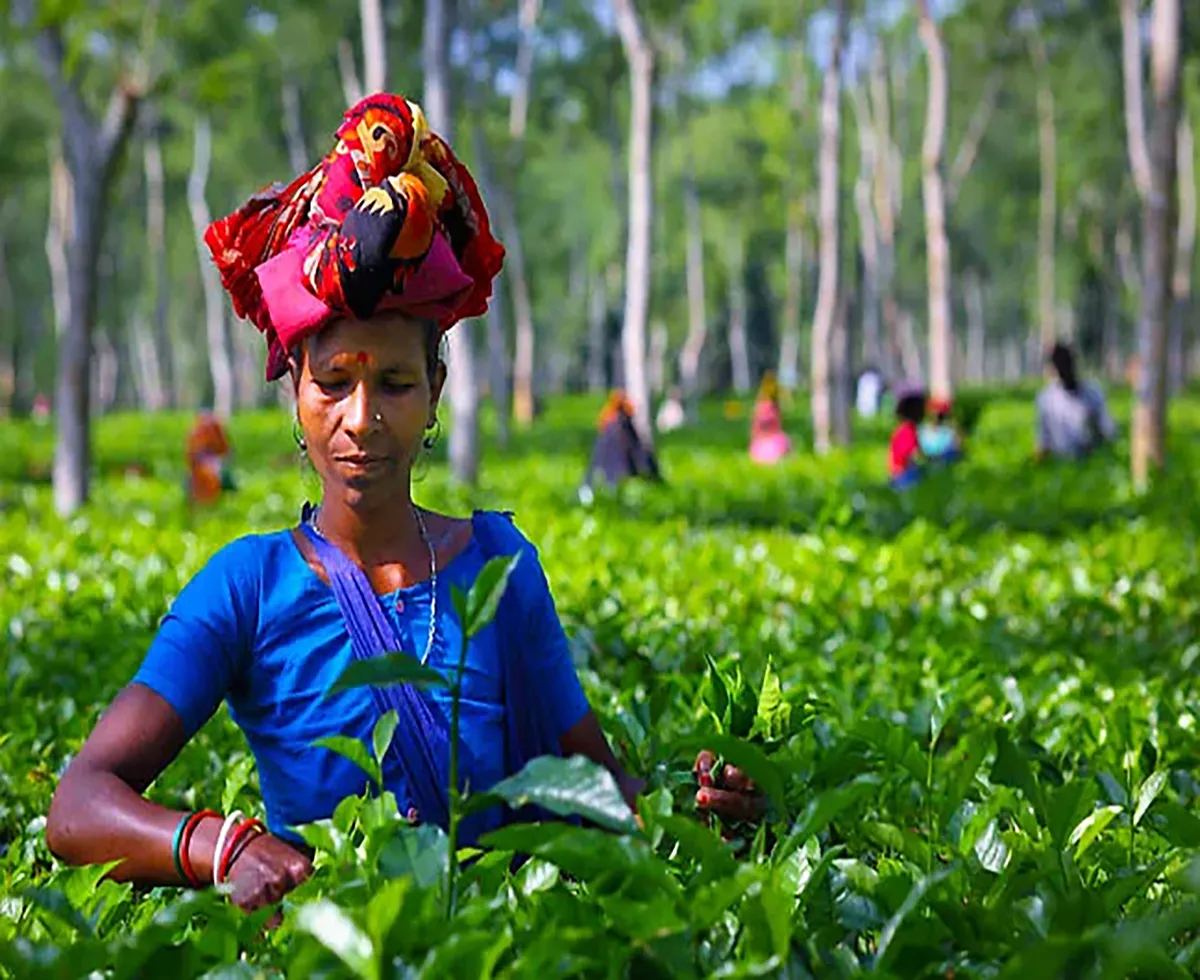
Tea workers carefully pluck fresh leaves from rolling plantations.
Fishermen cast their nets at sunrise along rivers that have sustained communities for centuries.
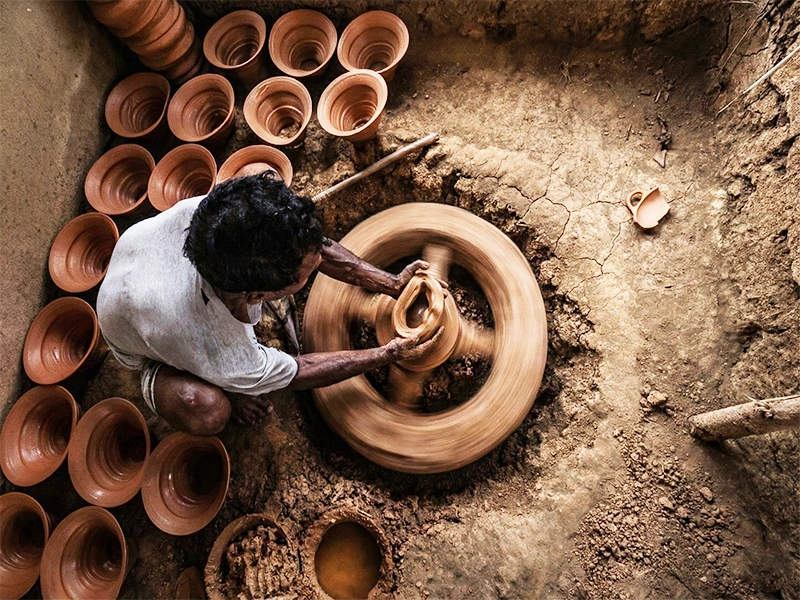
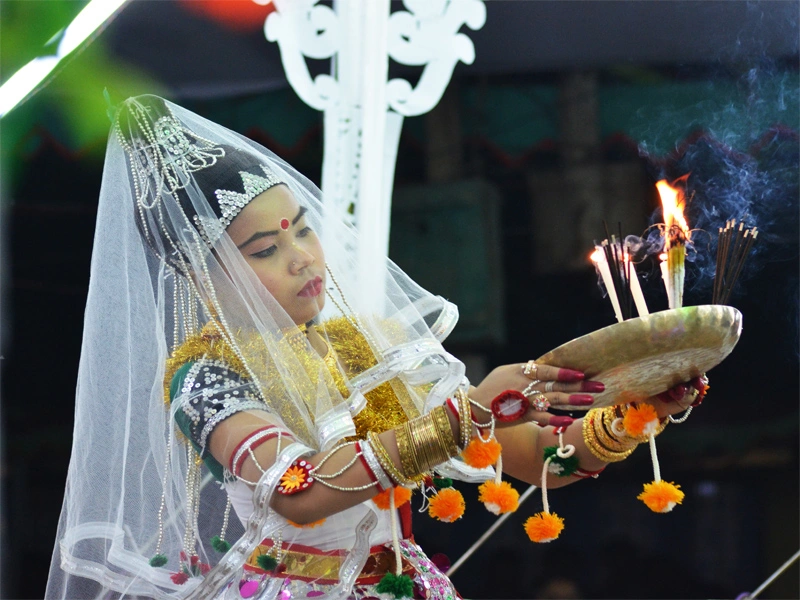
Artisans continue centuries-old traditions using techniques passed down through generations.
Village markets buzz with genuine local life rather than souvenir stalls.
Instead of watching culture behind museum glass, you become part of it.
You’ll share tea with local families.
Ride traditional wooden boats through quiet villages.
Taste recipes perfected over generations.
Listen to stories told by people whose ancestors have lived in these regions for hundreds of years.
Every encounter feels real because it is.
One Country, Countless Worlds
Few countries offer such astonishing geographical diversity within relatively short travel distances.
During this single journey, you’ll experience:
- Bustling metropolitan Dhaka
- Endless emerald tea gardens in Sreemangal
- Wildlife-filled tropical rainforest
- Spiritual shrines and ancient cities
- Peaceful backwaters of the Ganges Delta
- Floating markets bursting with local life
- UNESCO World Heritage monuments
- The magnificent Sundarbans mangrove forest
- Historic Silk Road cities
- Medieval mosques and temple towns
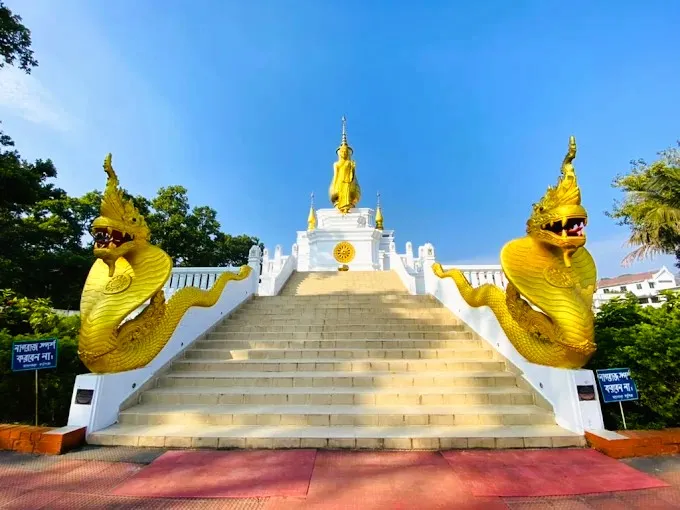
- Ancient Buddhist monasteries
- Traditional river islands known as chars
- Vibrant indigenous cultures in the Chittagong Hill Tracts
- The world’s longest natural sea beach
- Dramatic coastal scenery stretching to Bangladesh’s southern frontier
Very few journeys in Asia combine wildlife, archaeology, history, living culture, river life, mountains, forests, beaches, and authentic local experiences into a single carefully crafted itinerary.
This is precisely what makes Bangladesh extraordinary.
Your Journey Begins in Dhaka—City That Never Stops Moving
Every great adventure begins with a first impression.
In Bangladesh, that first impression is unforgettable.
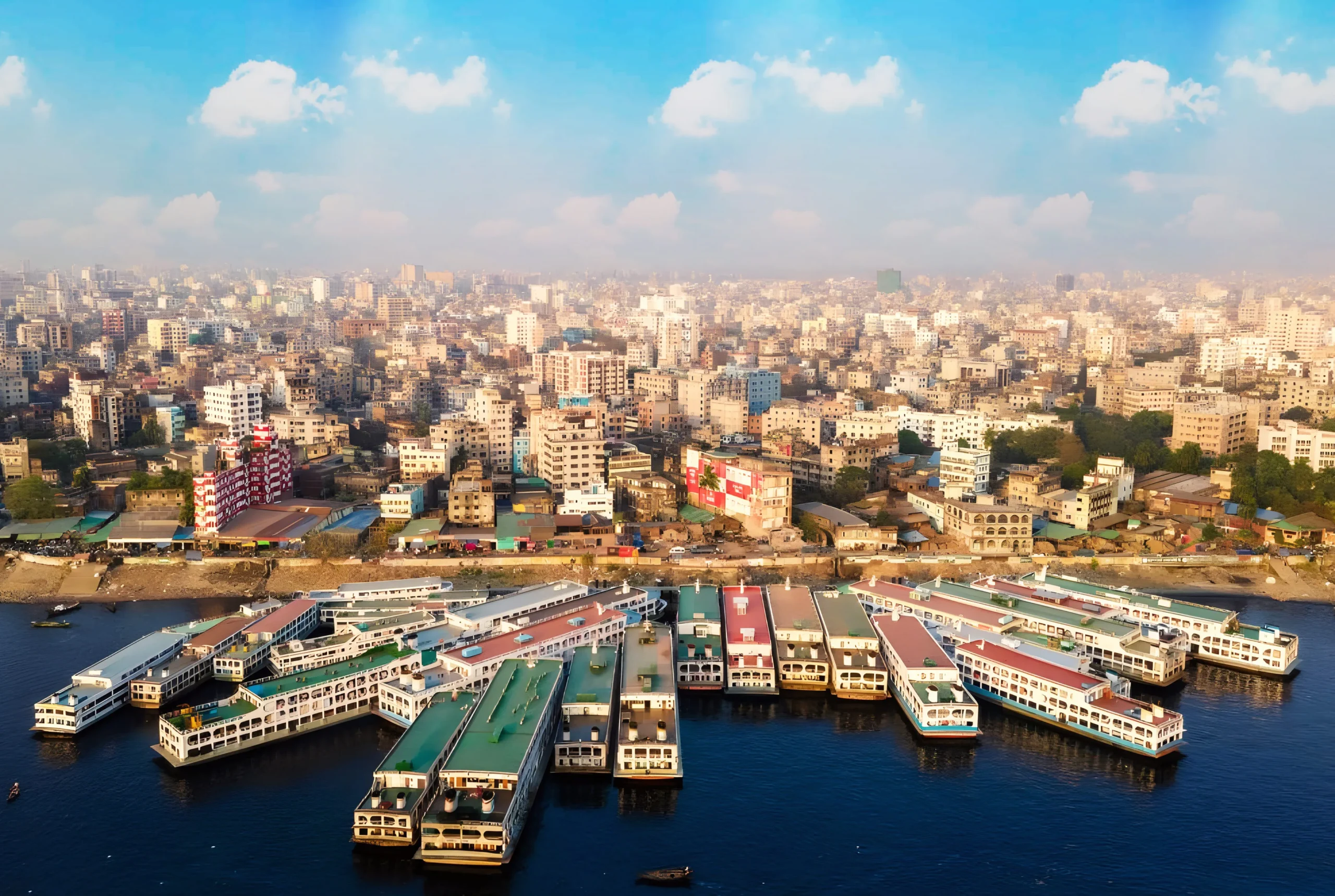
Your journey starts in Dhaka, one of the world’s most energetic and fascinating megacities. At first glance, it may seem chaotic, but spend a little time here, and you’ll discover an incredible rhythm beneath the surface.
Rickshaws decorated like moving works of art glide through crowded streets.
Street vendors prepare delicious snacks whose aromas fill entire neighbourhoods.
The call to prayer echoes from historic mosques while modern skyscrapers rise nearby.
Colonial architecture stands beside Mughal monuments.
Ancient traditions blend effortlessly with contemporary life.
Rather than simply passing through Dhaka, you’ll begin understanding Bangladesh itself.
Every busy intersection tells a story.
Every neighbourhood reflects centuries of history.
Every smiling face reminds you that hospitality remains one of the country’s greatest treasures.
Into the Emerald Hills of Sreemangal
Leaving Dhaka behind, the landscape begins to change.
Concrete slowly gives way to endless greenery.
The roads become quieter.
Fresh country air replaces the city’s bustle.
Soon, the rolling tea gardens of Sreemangal unfold before you like a giant green carpet stretching towards the horizon.
Often called the Tea Capital of Bangladesh, Sreemangal produces most of the country’s finest tea and offers some of its most peaceful scenery. Gentle hills are covered with perfectly aligned tea bushes, while workers wearing colourful baskets carefully harvest young leaves that will eventually become the tea served across Bangladesh.
But tea is only part of the story.
The surrounding countryside reveals fragrant lemon orchards, pineapple plantations, rubber estates, and small Indigenous communities where traditional lifestyles continue much as they have for generations.
As evening approaches, there is no better way to end the day than with a cup of Bangladesh’s famous Seven Layer Tea.
Each colourful layer carries a slightly different flavour, creating one of the country’s most iconic culinary experiences.
Watching the sun disappear behind the tea gardens while sipping this remarkable drink is one of those simple travel moments you’ll remember long after returning home.
Walking Among Gibbons in Lawachara National Park
Before sunrise, the rainforest awakens.
Birdsong echoes through towering trees.
Butterflies drift between shafts of golden morning light.
The forest floor comes alive with movement.
Lawachara National Park is one of Bangladesh’s richest biodiversity hotspots and offers visitors a rare opportunity to experience tropical rainforest almost exactly as nature intended.
Your walk through the forest is more than a hike.
It is an expedition into one of South Asia’s most precious ecosystems.
The greatest reward?
Hearing the haunting calls of the endangered Western Hoolock Gibbon before you see them swinging gracefully through the forest canopy.
Along the trails, experienced guides help spot colourful birds, butterflies, reptiles, orchids, and countless smaller creatures that most visitors would otherwise miss.
This peaceful rainforest offers a striking contrast to bustling Dhaka, proving once again how dramatically Bangladesh’s landscapes can change in just a few hours of travel.
And this is only the beginning.
The greatest adventures still lie ahead.
From Rainforest to Spiritual Heartland: Discovering Sylhet
Leaving the tranquil forests of Sreemangal behind, the journey continues north towards Sylhet, a region celebrated for its rolling tea estates, crystal-clear streams, and deep spiritual heritage.
Along the way, the scenery changes once again.
Tea gardens stretch across gentle hills before giving way to wetlands, villages, and bustling market towns where daily life unfolds at an unhurried pace. One of the region’s hidden gems is the beautiful Madhabpur Lake, nestled within a tea estate. During winter, migratory birds gather here, while water lilies bloom across the calm surface, creating one of Bangladesh’s most photogenic landscapes.
Sylhet itself holds a special place in the country’s history and identity.
For centuries, pilgrims have travelled here to pay their respects at the shrine of the revered Sufi saint Hazrat Shah Jalal, whose arrival in the 14th century helped spread Islam across the region. Around the shrine, you’ll find a fascinating blend of faith, tradition, and everyday life as worshippers, visitors, and local traders fill the surrounding streets.
If time allows, a stroll across the historic Keane Bridge, past colonial-era landmarks and lively bazaars, offers a glimpse into Sylhet’s unique character. In this city, history and modern life comfortably coexist.
Before long, a short domestic flight returns you to Dhaka, where another chapter of your adventure begins.
Dhaka Beyond the Guidebooks
Many visitors treat Dhaka as simply a gateway to Bangladesh.
That would be a mistake.
The capital deserves time, curiosity, and an open mind.
Spend a free day exploring at your own pace, and you’ll quickly understand why no two walks through Dhaka are ever the same.
A colourful rickshaw ride might lead you past elegant colonial buildings, leafy university campuses, roadside tea stalls, and vibrant local markets—all within minutes.
The campus of the University of Dhaka remains one of the intellectual hearts of the nation. Nearby stands the Shaheed Minar, the National Martyrs’ Monument dedicated to the heroes of the 1952 Language Movement. More than a memorial, it represents Bangladesh’s enduring struggle to preserve its language, culture, and identity.
For shoppers, Dhaka offers remarkable variety.
Beautiful handcrafted products, traditional textiles, and locally made souvenirs can be found in trusted artisan shops, while contemporary fashion boutiques showcase Bangladesh’s globally renowned garment industry.
Every street reveals another unexpected discovery.
Stepping Back Through Time in Old Dhaka
If modern Dhaka is energetic, Old Dhaka is unforgettable.
Founded during the Mughal period, this historic quarter is a maze of narrow alleyways, centuries-old buildings, colourful markets, hidden courtyards, and aromas drifting from family-run kitchens.
Here, history is not preserved behind barriers.
It remains alive.
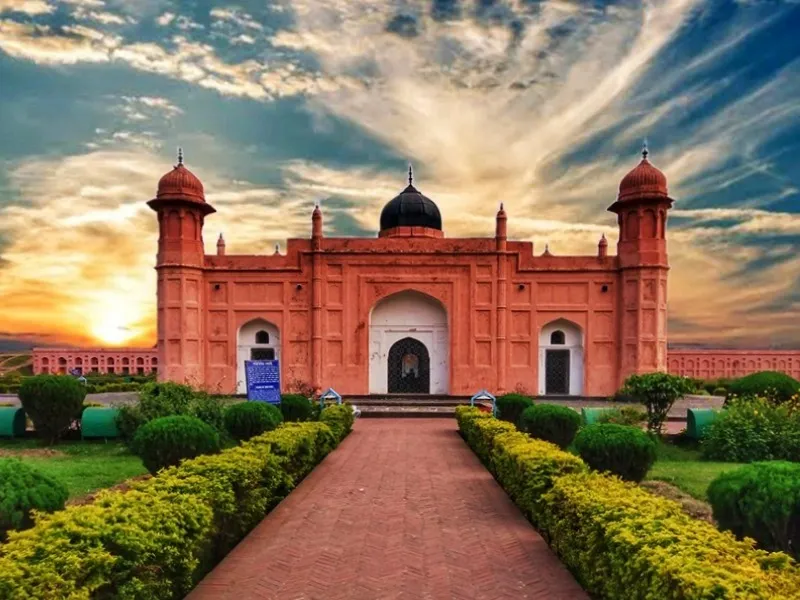
The magnificent Lalbagh Fort stands as one of the finest surviving Mughal monuments in Bangladesh. Although construction was never completed, its elegant gardens, mosque, museum, and impressive gateways continue to tell stories of emperors, governors, and political intrigue.
Nearby, the dazzling Star Mosque captures visitors with its intricate mosaic decoration, where countless fragments of porcelain and colourful tiles shimmer in the sunlight.
Just a short walk away lies the Armenian Church, a reminder of the thriving Armenian merchant community that once played an important role in Dhaka’s commercial life.
Then comes the city’s most recognisable landmark.
The pink façade of Ahsan Manzil, once home to the Nawabs of Dhaka, rises proudly beside the Buriganga River. Inside, beautifully restored galleries reveal the grandeur of nineteenth-century Bengal’s aristocratic society.
Yet perhaps the most memorable experience isn’t found inside a monument.
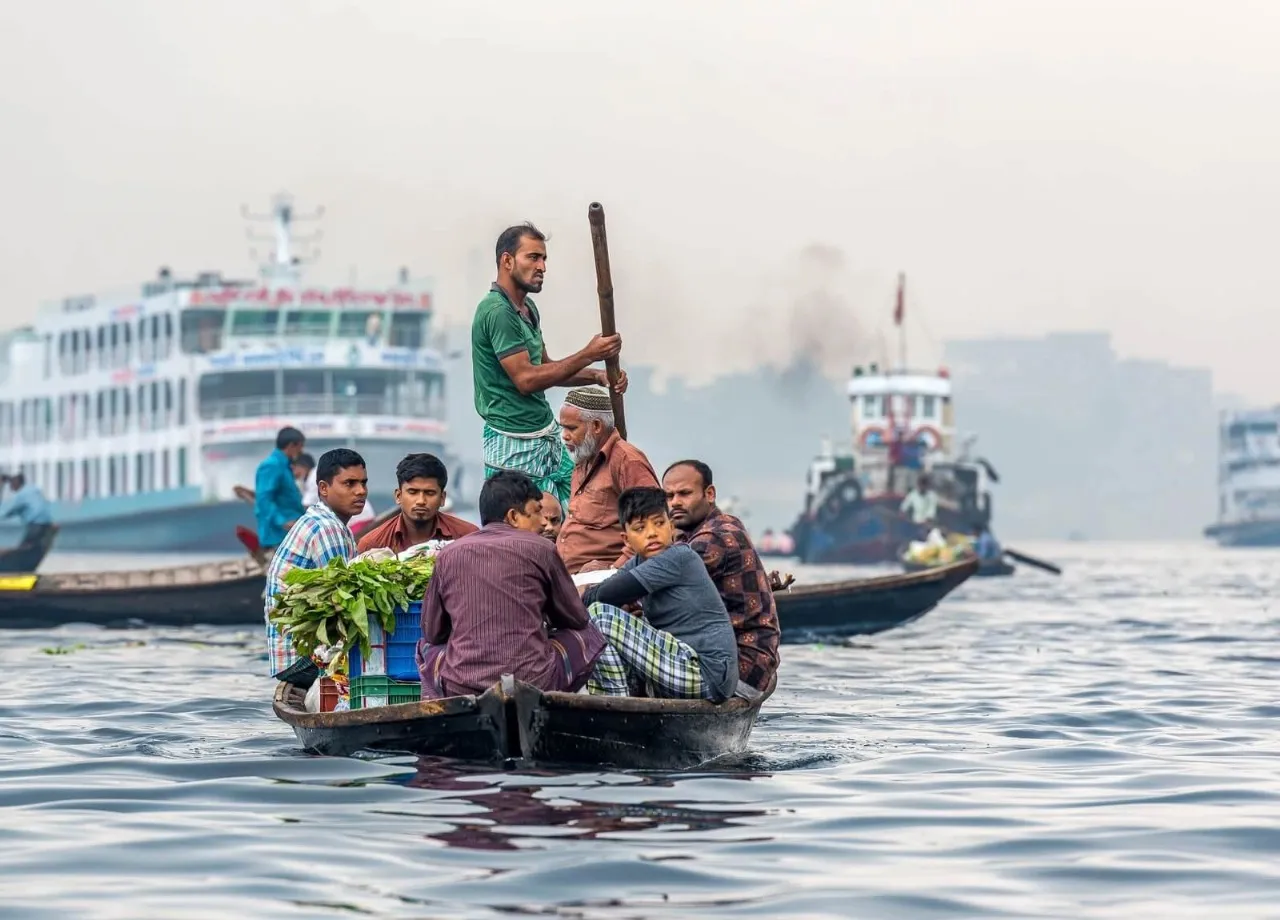
It begins aboard a traditional wooden boat.
As you gently drift across the Buriganga, surrounded by hundreds of ferries, cargo boats, fishing vessels, and river traders, you’ll witness the lifeblood of Bangladesh.
The river never sleeps.
Neither does the city.
Back on land, Shankhari Bazar offers one final journey through time. This centuries-old Hindu neighbourhood remains one of the oldest continuously inhabited streets in Bangladesh, where artisans continue crafting traditional conch-shell ornaments using techniques passed down through generations.
Every corner whispers history.
Every lane tells another story.
A Masterpiece of Modern Architecture
Bangladesh isn’t only about ancient monuments.
It also boasts one of the twentieth century’s greatest architectural achievements.
The National Parliament Building, designed by the legendary American architect Louis Kahn, is widely regarded as one of the world’s finest examples of monumental modern architecture.
Massive geometric forms, dramatic reflections across surrounding lakes, carefully controlled natural light, and minimalist elegance combine to create a building admired by architects from around the globe.
Even visitors with little interest in architecture often leave deeply impressed.
It is a powerful reminder that Bangladesh continues to shape history—not only preserve it.
An Overnight Voyage Into River Country
As evening falls, another unforgettable experience begins.
You board one of Bangladesh’s iconic overnight river vessels bound for Barishal.
The city lights slowly fade behind you.
The river widens.
A cool breeze drifts across the open deck.
Cargo boats, fishing vessels, and illuminated ferries glide silently through the darkness while tea vendors continue serving steaming cups well into the night.
Sleeping aboard an overnight river ferry isn’t simply transportation.
It’s an authentic Bangladeshi experience that connects you to the country’s remarkable river culture.
For generations, these waterways have served as the nation’s highways, linking distant communities long before roads reached them.
As dawn approaches, gentle sunlight begins reflecting across the calm waters.
Your next adventure is waiting.
Floating Markets and Hidden Waterways of the Delta
Morning in Barishal feels completely different from anywhere you’ve visited so far.
Instead of highways, narrow canals weave through lush countryside.
Instead of traffic, wooden boats quietly navigate between villages.
The fertile delta landscape unfolds in every direction, lined with coconut palms, banana groves, betel nut trees, and vibrant rural communities.
Travelling by traditional country boat allows you to experience a side of Bangladesh that few international visitors ever witness.
Depending on the season, you’ll encounter lively floating markets where local farmers and traders gather directly on the water to buy and sell fresh produce. During the monsoon months, colourful guavas dominate the scene, while winter brings floating vegetable markets overflowing with seasonal harvests.
The atmosphere is wonderfully authentic.
Neighbours greet one another from boat to boat.
Children wave enthusiastically from canal banks.
Fishermen cast their nets with remarkable precision.
Life flows at the pace of the river itself.
As you continue cruising through quiet backwaters, you’ll visit small village markets, observe traditional coconut processing, and enjoy meals prepared onboard while surrounded by peaceful delta scenery.
This is slow travel at its very best.
And soon, the journey will take another dramatic turn—from tranquil waterways to one of the world’s greatest archaeological treasures, then deep into the legendary Sundarbans, the largest mangrove forest on Earth.
Where History Meets Wilderness: UNESCO Heritage to Sundarbans
As the peaceful canals of Barishal disappear behind you, Bangladesh reveals yet another completely different face.
The quiet rhythm of river life gives way to ancient cities, magnificent Islamic architecture, and one of the greatest wildernesses left on Earth.
It is remarkable how quickly the country transforms.
Every few hundred kilometres feels like entering an entirely new destination.
Bagerhat: A Forgotten Medieval Kingdom
Driving southwest towards Bagerhat, the landscape gradually shifts from riverine countryside to one of Bangladesh’s most important historical treasures.
Recognised as a UNESCO World Heritage Site, Bagerhat was founded in the 15th century by the remarkable Turkish general and saint Khan Jahan Ali. Originally known as Khalifatabad, the city became a thriving centre of administration, trade, religion, and architecture during the Bengal Sultanate.
Unlike many archaeological sites that exist only as ruins, Bagerhat still feels alive.
Its centuries-old mosques continue to welcome worshippers.
Its ancient reservoirs still mirror the sky.
Its peaceful atmosphere remains largely unchanged.
The crown jewel is the magnificent Sixty Dome Mosque. Despite its popular name, the building actually contains seventy-seven low domes supported by rows of elegant stone pillars, making it one of the finest surviving examples of Sultanate architecture anywhere in South Asia.
Soft afternoon light filtering through its countless arches creates an almost spiritual atmosphere that photographers and history lovers alike will never forget.
Nearby, smaller monuments—including the Nine Dome Mosque, the Tomb of Khan Jahan Ali, and other beautifully preserved structures—paint a vivid picture of a flourishing medieval city that once connected Bengal to the wider Islamic world.
Entering the Kingdom of the Royal Bengal Tiger
Few places on Earth inspire the imagination quite like the Sundarbans.
This immense mangrove forest, shared between Bangladesh and India, is the largest of its kind anywhere in the world and another UNESCO World Heritage Site.
But the Bangladeshi side offers something increasingly rare.
True wilderness.
Here, roads disappear.
Mobile signals fade.
Nature takes complete control.
Your floating home for the next few days becomes a traditional expedition boat, slowly navigating an endless maze of winding rivers, tidal creeks, and hidden channels.
Life immediately slows down.
The constant sounds of civilisation are replaced by the splashing of water, distant bird calls, rustling leaves, and the occasional cry of monkeys hidden high in the trees.
Every bend in the river carries a sense of anticipation.
What waits around the next corner?
Life Inside One of the World’s Greatest Mangrove Forests
Exploring the Sundarbans is unlike visiting any other national park.
There are no safari vehicles.
No fenced viewpoints.
No predictable wildlife encounters.
Instead, every excursion feels like a genuine expedition.
Accompanied by experienced naturalist guides, you’ll venture into narrow creeks aboard small wooden boats where silence becomes your greatest ally.
Saltwater crocodiles bask along muddy banks.
Monitor lizards slip quietly into the water.
Spotted deer graze cautiously beneath dense mangrove vegetation.
Families of playful macaques leap effortlessly between branches overhead.
Hundreds of bird species transform the forest into a paradise for wildlife enthusiasts.
Kingfishers flash brilliant colours across the waterways.
White-bellied sea eagles circle above.
Herons, egrets, bee-eaters, storks, and countless migratory birds create a constantly changing spectacle.
Every tide reveals something new.
In Search of the Elusive Royal Bengal Tiger
Of course, one resident captures every visitor’s imagination.
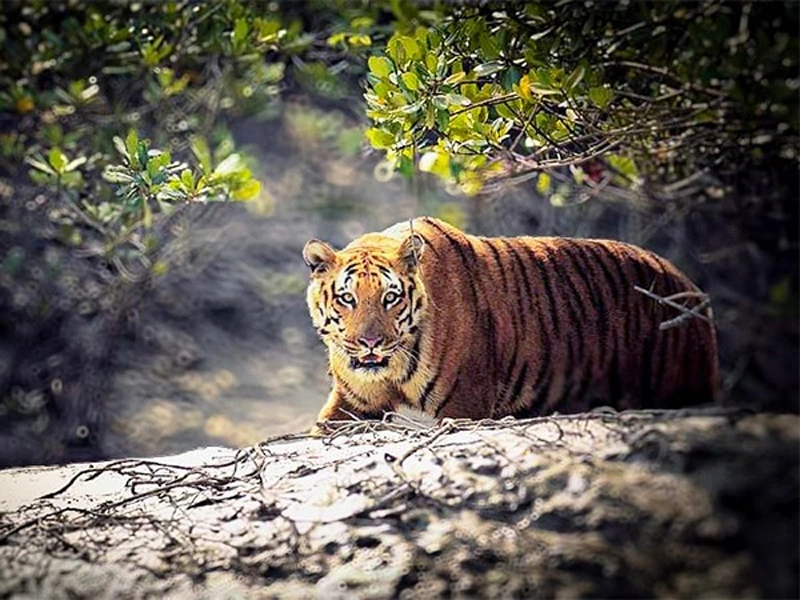
The Royal Bengal Tiger.
The Sundarbans supports one of the world’s last populations of wild Bengal tigers, specially adapted to life within tidal mangrove forests.
Unlike tigers elsewhere, these remarkable predators swim confidently across rivers and navigate muddy islands with astonishing ease.
Yet spotting one remains incredibly rare.
And perhaps that is exactly what makes the experience so special.
Every footprint pressed into soft mud…
Every distant alarm call from deer…
Every sudden silence within the forest…
Raises the possibility that one of nature’s greatest predators may be watching from somewhere beyond the trees.
Whether you see a tiger or not becomes almost secondary.
Simply knowing they still thrive here transforms every moment into an unforgettable adventure.
Sunsets Over the Mangroves
Evenings aboard the boat possess a magic entirely their own.
As the sun slowly sinks behind the mangrove horizon, golden reflections dance across calm waterways.
The forest becomes silent.
Freshly prepared local meals are served on deck beneath a sky filled with countless stars.
Far away from city lights, the night feels wonderfully untouched.
Conversations grow quieter.
The air becomes cooler.
And the wilderness slowly takes over.
Many travellers later describe these evenings as the emotional highlight of their entire journey in Bangladesh.
Rajshahi: Bangladesh’s Elegant Silk City
Leaving the coast behind, the adventure turns north towards Rajshahi, often called Bangladesh’s cleanest and greenest city.
Located beside the mighty Padma River, Rajshahi has long been famous for its exquisite silk industry.
Visiting a traditional silk workshop offers fascinating insight into one of the country’s oldest crafts.
From delicate silkworm cocoons to spinning, dyeing, weaving, and finishing, every stage demonstrates remarkable craftsmanship developed over generations.
The finished fabrics remain among Bangladesh’s finest textile products and make exceptional souvenirs.
Yet Rajshahi offers far more than silk.
It serves as the gateway to some of Bengal’s greatest archaeological treasures.
Gauda: Walking Through Bengal’s Lost Capital
Centuries before Dhaka became the nation’s capital, Gauda ruled Bengal.
Today, scattered across the Bangladesh-India border, the surviving monuments hint at the immense power this medieval metropolis once possessed.
Massive gateways.
Ancient mosques.
Historic reservoirs.
Fortifications reclaimed by nature.
Walking among these atmospheric ruins feels almost cinematic.
Unlike heavily visited archaeological sites elsewhere in Asia, Gauda remains wonderfully peaceful, allowing visitors to absorb centuries of history without crowds.
Every weathered brick carries memories of empires, merchants, scholars, and rulers who shaped Bengal’s remarkable past.
Puthia: Bangladesh’s Most Beautiful Temple Village
Few international travellers expect to discover such remarkable Hindu temple architecture in Bangladesh.
Yet Puthia surprises everyone.
This charming heritage town is home to the country’s largest concentration of historic Hindu temples, each decorated with intricate terracotta carvings depicting scenes from the Ramayana, the Mahabharata, and everyday village life.
The elegant Govinda Temple, soaring Shiva Temple, graceful Dol Temple, and magnificent Puthia Rajbari together create one of the finest architectural ensembles in South Asia.
The peaceful ponds surrounding these monuments perfectly reflect their ornate façades, creating breathtaking opportunities for photographers.
At sunrise and sunset, the entire complex glows with warm golden light.
It is one of Bangladesh’s true hidden gems.
Somapura Mahavihara: A Lost University of the Ancient World
Continuing westward, another UNESCO World Heritage Site awaits.
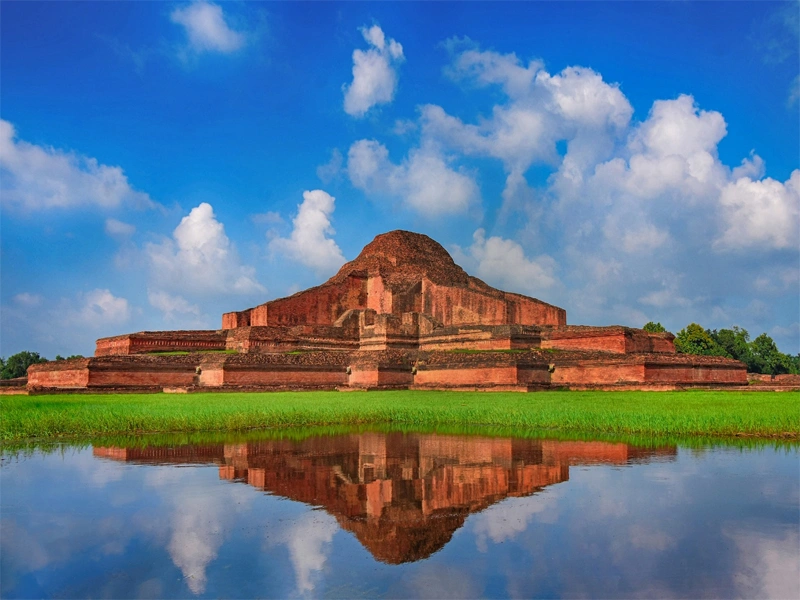
Somapura Mahavihara, located at Paharpur, was one of the most important Buddhist monasteries and centres of learning in Asia during the eighth and ninth centuries.
Long before Oxford, Cambridge, or many famous European universities existed, monks, scholars, philosophers, and students travelled here from across the Buddhist world to exchange knowledge.
Today, the enormous cruciform monastery remains astonishingly well preserved.
Walking through its ancient courtyards, meditation chambers, and prayer halls offers a rare opportunity to connect with one of South Asia’s greatest intellectual achievements.
The peaceful surroundings make it easy to imagine the quiet rhythm of scholarly life that once flourished here over a thousand years ago.
And as your journey continues northward, Bangladesh once again prepares to surprise you—this time with ancient fortified cities, river islands shaped by powerful currents, colourful palace architecture, and communities whose traditions remain deeply connected to the land.
Northern Bangladesh: Where Ancient Civilisations First Flourished
The further north you travel, the deeper Bangladesh’s history becomes.
This region was once home to some of the earliest organised settlements on the Bengal delta, where kingdoms rose and fell long before the arrival of the Mughals or the British.
Every hill, mound, and weathered brick carries echoes of civilisations that shaped South Asia.
Mahasthangarh: The Birthplace of Urban Bangladesh
Perched above the floodplains of the Karatoya River lies Mahasthangarh, widely regarded as the oldest known urban archaeological site in Bangladesh.
Dating back more than 2,300 years, this ancient fortified city served as the capital of the Pundra Kingdom and later became an important centre under Mauryan, Gupta, Pala, and Sena rule.
Walking along its massive earthen ramparts, it’s easy to imagine bustling marketplaces, royal processions, scholars debating philosophy, and traders arriving from distant lands.
Unlike reconstructed historical attractions, Mahasthangarh feels authentic.
Excavated temples, ancient roads, wells, defensive walls, and scattered ruins quietly reveal layer upon layer of history.
Nearby museums preserve remarkable sculptures, inscriptions, pottery, coins, and everyday artefacts that help bring this forgotten civilisation back to life.
For anyone fascinated by archaeology, this is one of Bangladesh’s most rewarding destinations.
Life on the Jamuna Chars
History soon gives way to another extraordinary experience.
The mighty Jamuna River constantly reshapes the land, creating temporary islands known locally as chars.
These islands appear, disappear, and change shape as the river shifts over the years.
Communities living here have learned to adapt with remarkable resilience.
A visit to a char offers a rare glimpse into a way of life that few outsiders ever witness.
Simple homes stand beside fertile fields.
Children play barefoot along sandy riverbanks.
Farmers cultivate seasonal crops while remaining fully aware that the landscape beneath them may one day vanish beneath floodwaters.
Despite these challenges, the warmth and generosity of the people remain unforgettable.
It is one of the most humbling cultural experiences in Bangladesh.
Dinajpur and the Finest Terracotta Temple in the Country
Continuing north, the landscape becomes dotted with mango orchards, rice fields, and quiet villages before revealing one of Bangladesh’s greatest architectural masterpieces.
The Kantajew Temple—often called Kantaji Temple—is considered the country’s finest surviving example of terracotta architecture.
Constructed during the eighteenth century, nearly every inch of its exterior is decorated with exquisitely carved terracotta panels.
Scenes from the Ramayana and Mahabharata unfold alongside depictions of musicians, dancers, hunters, elephants, horses, flowers, birds, and scenes from daily Bengali life.
The sheer craftsmanship is astonishing.
Nearby stands the charming Nayabad Mosque, built by Muslim artisans who helped construct the temple—a beautiful reminder of Bengal’s long tradition of religious coexistence and shared craftsmanship.
Returning South: The Medieval Capital of Sonargaon
After exploring northern Bangladesh, the journey gradually turns back towards the country’s central region.
Few places better illustrate Bengal’s rich trading history than Sonargaon.
Once one of the wealthiest capitals in the region, Sonargaon flourished as an international trading centre where merchants from Arabia, Persia, China, and Europe exchanged textiles, spices, and luxury goods.
Today, its most famous attraction is Panam City.
Walking through this abandoned merchant town feels almost surreal.
Elegant colonial and Indo-European mansions line both sides of a quiet street, their faded façades slowly being reclaimed by nature.
Broken balconies, decorative columns, carved wooden doors, and creeping vines create an atmosphere unlike anywhere else in Bangladesh.
Nearby, the Folk Art and Craft Museum celebrates centuries of traditional craftsmanship, from weaving and pottery to wood carving and metalwork. At the same time, the beautifully preserved Goaldi Mosque stands as one of the finest remaining examples of pre-Mughal Sultanate architecture.
Mainamati: Echoes of Ancient Buddhism
The story of Bangladesh’s spiritual heritage continues at Mainamati.
Spread across a series of low ridges near Cumilla, this archaeological landscape contains dozens of ancient Buddhist monasteries, temples, shrines, and meditation centres dating from the seventh to twelfth centuries.
Excavated courtyards, prayer halls, and monastic cells reveal how Buddhism once flourished throughout eastern Bengal.
The on-site museum displays remarkable bronze sculptures, stone carvings, terracotta plaques, coins, jewellery, and everyday objects discovered during excavations.
Together with Somapura Mahavihara, Mainamati provides an extraordinary window into Bangladesh’s ancient Buddhist past.
Chattogram: Bangladesh’s Maritime Gateway
As the road heads southeast, the scenery changes once again.
Bangladesh’s commercial capital, Chattogram, is a city shaped by the sea.
Its busy port has connected Bengal with the wider world for centuries, welcoming traders, explorers, pilgrims, and merchants from across Asia and beyond.
One of the city’s most fascinating experiences is visiting the traditional fishing harbour before sunrise.
Here, colourful wooden boats return from the Bay of Bengal loaded with fresh catches while auctions, porters, buyers, and fishermen create an atmosphere bursting with energy.
Nearby, historic neighbourhoods, colonial landmarks, temples, mosques, and bustling markets reflect the city’s remarkable cultural diversity.
The Emerald Waters of Kaptai Lake
Leaving the coast behind, the road climbs gently into the Chittagong Hill Tracts.
The air grows cooler.
The hills become greener.
Towering forests replace busy streets.
Soon, the shimmering waters of Kaptai Lake appear between the mountains.
Created in the 1960s, this vast freshwater lake has become one of Bangladesh’s most spectacular landscapes.
A leisurely boat ride across its calm waters reveals forest-covered islands, distant hill villages, fishing boats, and endless reflections dancing across the surface.
It feels peaceful.
Timeless.
Almost untouched.
Bandarban: Bangladesh Above the Clouds
Perhaps nowhere surprises visitors more than Bandarban.
Many travellers simply don’t expect Bangladesh to possess landscapes like these.
Rolling mountains disappear into the horizon.
Clouds drift through lush valleys.
Waterfalls tumble down forested slopes.
Remote villages cling to steep hillsides.
At viewpoints such as Nilachal, panoramic vistas stretch across endless waves of green, especially magical during sunrise and sunset when mist slowly rises from the valleys below.
Bandarban is also home to many Indigenous communities whose diverse languages, traditions, textiles, and lifestyles contribute to the country’s extraordinary cultural richness.
Visiting local villages respectfully offers meaningful opportunities to learn about centuries-old traditions while supporting community-based tourism.
Following the Sangu River
The beautiful Sangu River winds gracefully through Bandarban like a ribbon of silver.
A traditional boat ride here is wonderfully peaceful.
Steep hills frame the river.
Children wave from bamboo houses.
Fishermen paddle silently through calm waters.
Life seems beautifully uncomplicated.
Moments like these remind travellers that five-star hotels don’t always measure luxury.
Sometimes, true luxury is simply slowing down enough to appreciate the world around you.
Cox’s Bazar: Where Land Meets the Bay of Bengal
No journey across Bangladesh would be complete without visiting Cox’s Bazar.
Stretching for approximately 120 kilometres, it is widely recognised as the world’s longest uninterrupted natural sandy sea beach.
Here, the rhythm of the journey changes once again.
Golden sands extend towards the horizon.
Powerful waves roll gently onto the shore.
Fishing boats rest along the beach while colourful sunsets paint the sky in shades of orange, crimson, and violet.
Nearby, the Buddhist temples of Ramu preserve centuries of religious heritage, while traditional dry fish villages provide fascinating insight into one of the region’s oldest coastal industries.
A scenic drive towards Teknaf, passing Himchari and Inani Beach, reveals dramatic coastal cliffs, turquoise waters, and quieter stretches of coastline that remain refreshingly uncrowded.
Standing at Bangladesh’s southern frontier, overlooking the Bay of Bengal, provides a fitting conclusion to this unforgettable expedition.
More Than a Holiday—A Journey Through an Entire Nation
Over twenty-four extraordinary days, you’ll experience a Bangladesh that few international travellers ever have the opportunity to discover.
You’ll wander through UNESCO World Heritage Sites.
Cruise ancient rivers.
Search for wildlife in the Sundarbans.
Walk inside forgotten capitals.
Meet welcoming communities.
Explore tea gardens, rainforests, temples, mosques, monasteries, fishing villages, river islands, mountain valleys, and endless beaches.
Each destination reveals another chapter in the remarkable story of Bangladesh.
This isn’t simply sightseeing.
It’s an immersive journey through one of Asia’s most authentic, diverse, and rewarding destinations.
When you leave, you’ll take home far more than photographs.
You’ll carry unforgettable conversations, meaningful encounters, breathtaking landscapes, and memories of a country that quietly exceeds every expectation.
Why Travel with Panorama Bangladesh?
At Panorama Bangladesh, we believe the best journeys are built on authenticity, local expertise, and genuine human connection.
Our carefully designed itineraries go beyond famous landmarks to reveal the stories, cultures, landscapes, and people that make Bangladesh truly extraordinary. With experienced local guides, thoughtfully planned logistics, and a passion for responsible travel, we ensure every journey is immersive, comfortable, and unforgettable.
Whether you’re an adventurer, photographer, wildlife enthusiast, historian, or cultural explorer, we’ll help you experience the real Bangladesh.
The Bangladesh few travellers know.
The Bangladesh you’ll never forget.
Ready to Discover Bangladesh?
Your greatest journey through South Asia begins here.
Contact Panorama Bangladesh today and let us create an unforgettable adventure across one of the world’s last truly undiscovered destinations.