Day 1 — Arrival in Dhaka
Your plane descends over a patchwork of rivers and rice fields before touching down in Dhaka. The city greets you with a rush of colour and sound — rickshaws painted like moving art, the smell of spiced snacks from roadside stalls, and the hum of a metropolis where millions live side by side. Your guide meets you at the airport and whisks you to your hotel. Tonight, you rest and let the anticipation of the coming month settle in.
Day 2 — Dhaka’s Chaos & Charm, Rocket Steamer by Night
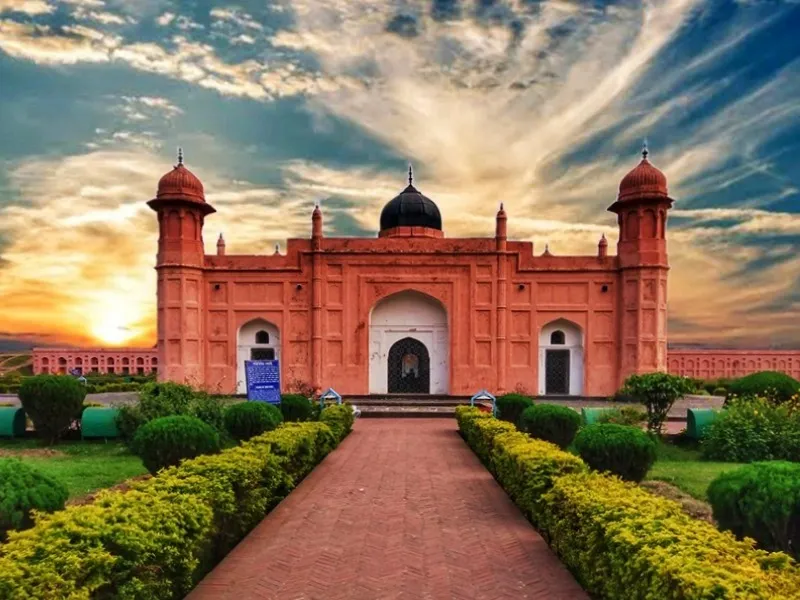
Morning light spills across Louis Kahn’s monumental Parliament House. Then you step back in time: incense-filled Dhakeshwari Temple, the Mughal brickwork of Lalbagh Fort, and the maze-like markets of Old Dhaka, where spices perfume the alleys and rickshaw bells never stop.
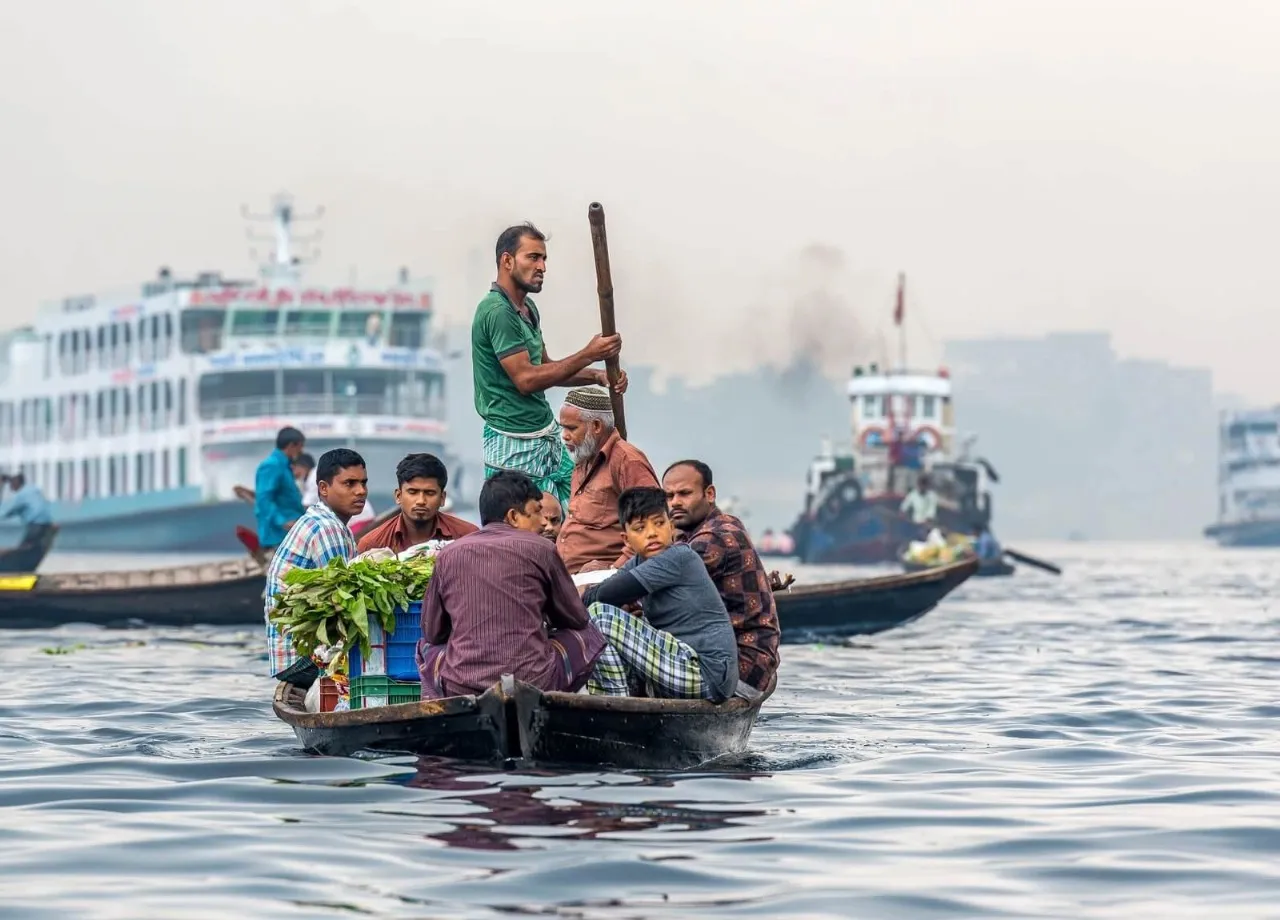
By sunset, you stand at Sadarghat Port, where ferries crowd the Buriganga River. A short rowboat ride puts you in the middle of the river ballet as the sky turns orange. Later, you board the century-old Rocket Steamer (or a modern ferry if she isn’t running). Your cabin rocks gently as paddles churn toward the south.
Day 3 — Barisal Backwaters: Floating Markets & Canal Life
At dawn, the world is water. You’re in the Barisal backwaters, where canals are roads and boats are buses. Wooden boats laden with guavas and vegetables gather at floating markets: men balancing sacks on poles, women bargaining across the water. Children wave from the banks; fishermen mend nets; the air smells of river and wood smoke.
You sip tea in a riverside bazaar and watch life unfold. By late afternoon, you return to Barisal with the memory of a morning unlike anywhere else in Asia.
Day 4 — Guava Gardens & Timber Markets
Mist hangs low as your boat drifts through guava orchards, fruits piled high in baskets that bob on the water. At a local school, children proudly show their workbooks. Later, at a timber market, men stride barefoot across floating logs, balancing with ease as they guide them into sawmills.
Lunch is served in a family home: rice, fish curry and mashed vegetables, all cooked with care. By evening, you’re back in Barisal, the scent of guava still fresh in your mind.
Day 5 — Bagerhat: The City of Mosques
This morning, history calls. In Bagerhat, 15th-century mosques rise from emerald fields. The jewel is the UNESCO-listed Sixty Dome Mosque, where light filters through a forest of stone pillars. You visit shrines, nine-domed sanctuaries and the ornate tomb of Khan Jahan Ali. Children play cricket among the ruins; goats wander lazily. As the sun sets over the domes, you continue to Mongla, where your Sundarbans adventure awaits.
Day 6 — Into the Sundarbans: Creeks & Silence
Your private houseboat awaits at Mongla, with permits secured and an armed forest guard on board. As the engine hums, you slip into the labyrinth of the Sundarbans. The creeks are silent but alive — kingfishers dart, herons stalk, a crocodile slides into the water.
At Harbaria, a boardwalk takes you into the forest, where roots twist like sculptures. Evening brings a rowboat safari near Kochikhali, the world hushed except for the splash of oars. Dinner is served on deck under a sky heavy with stars.
Day 7 — Sundarbans Deep: Jamtola Beach & Kotka Grasslands
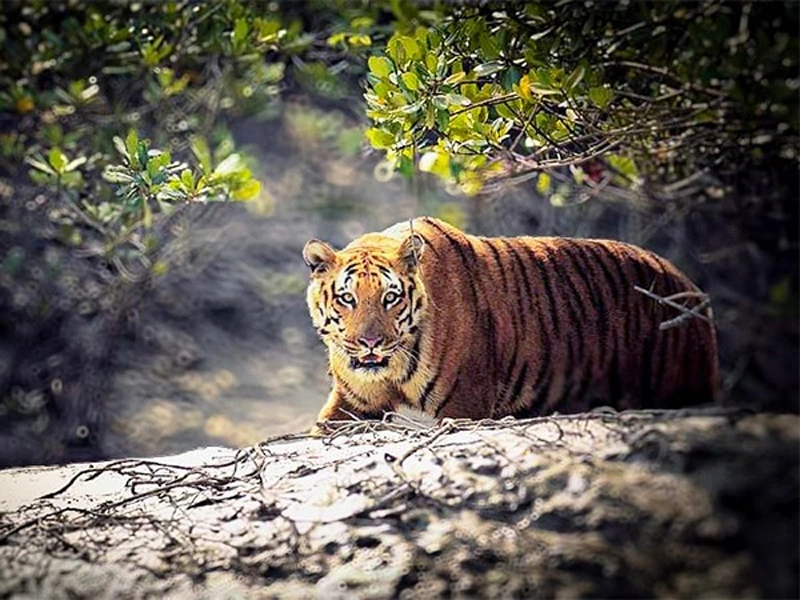
Dawn breaks in a misty glow. A small skiff takes you into narrow creeks as you scan for deer, wild boar and, with extraordinary luck, the shadow of a tiger. Later, you trek through the forest to Jamtola Beach, where the Bay of Bengal crashes on an untouched shore.
In the afternoon, Kotka’s grasslands come alive with spotted deer, monkeys and bird calls. As night falls, your boat anchors in calm waters and a barbecue sizzles on deck.
Day 8 — Sundarbans Farewell & Return to Khulna
Your final morning in the forest takes you to Karamjal, a wildlife centre with saltwater crocodile breeding ponds and a short boardwalk. Slowly, you cruise back toward Mongla, mangroves slipping away behind you. By afternoon, you’re in Khulna, a riverside city with a relaxed pace and tea stalls along the banks.
Day 9 — Narail: Fishing with Otters
In Narail, the Chitra River tells a rare story. Fishermen here still work with trained otters that herd fish into nets — a centuries-old tradition surviving in just a handful of villages. You sit in a wooden boat as otters splash and respond to soft whistles, driving fish into waiting nets.
Afterwards, the fishermen invite you for tea in their village, proud to share a way of life passed down through generations.
Day 10 — North by Train: Rajshahi & Silk
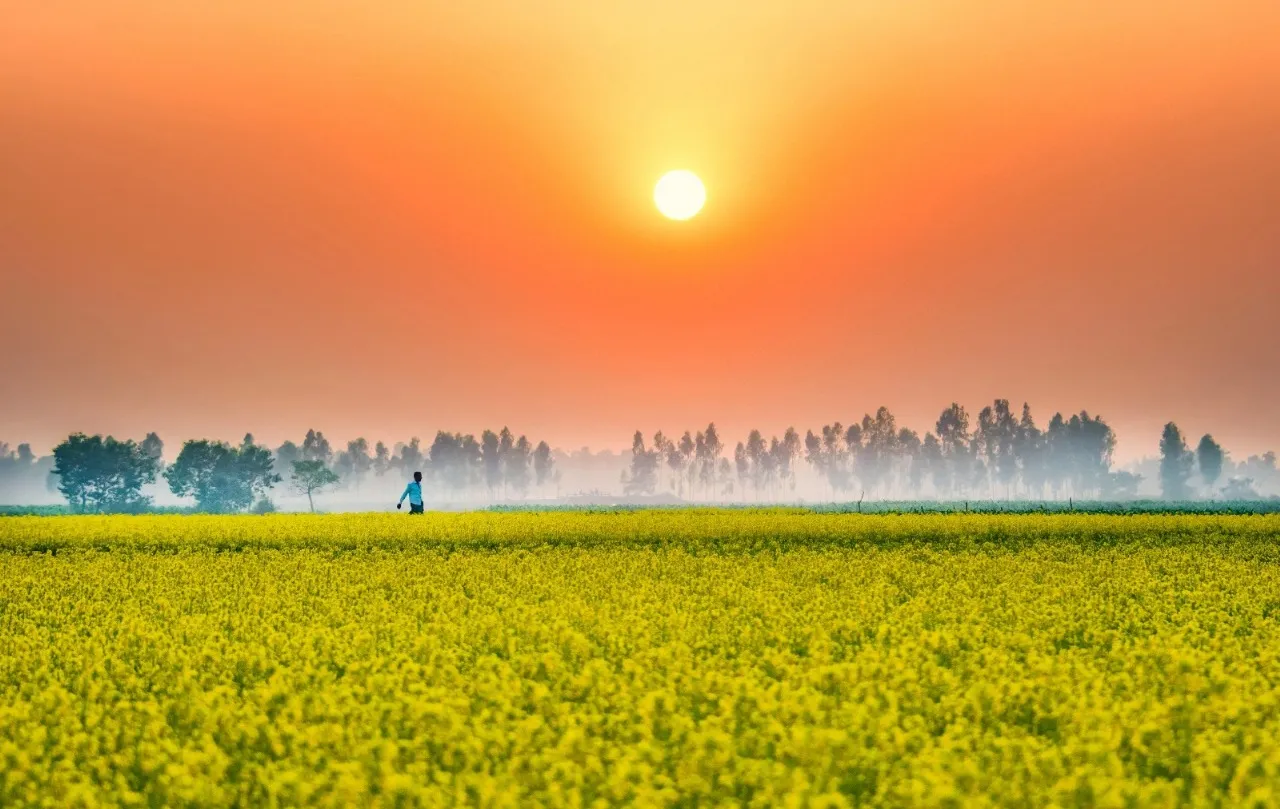
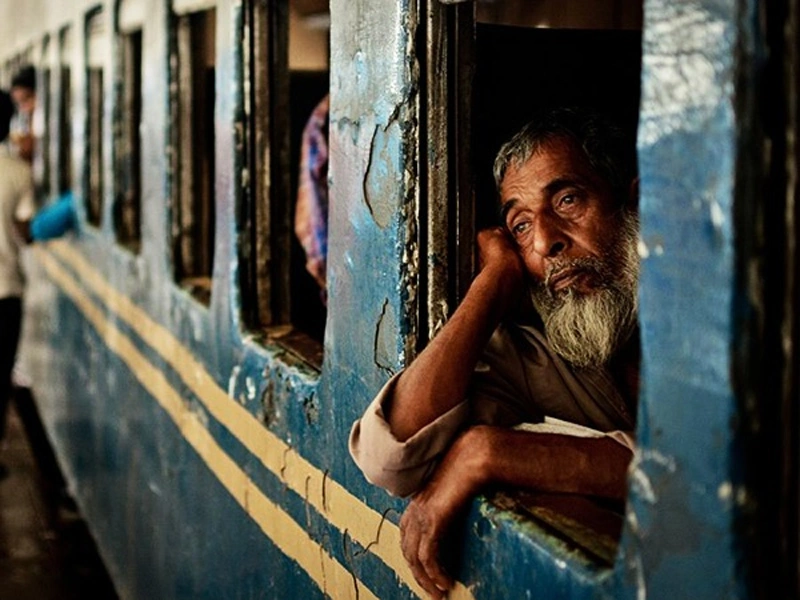
The train clatters north, fields of rice and mustard streaming past your window. By afternoon, you arrive in Rajshahi, famous for silk. In a workshop, cocoons are spun into shimmering thread as weavers work on looms with practised rhythm. At sunset, you stroll along the banks of the Padma River, its vast expanse glowing gold.
Day 11 — The Forgotten City of Gauda
You drive through mango orchards to the ruins of Gauda, once the capital of Bengal. Now, its mosques and palaces lie scattered in fields, half-hidden by trees. At Choto Sona Mosque, stone carvings remain astonishingly sharp. At Darasbari, creepers tangle over crumbling arches. It feels like discovering a secret city forgotten by time.
Day 12 — Puthia Temples & Natore Palace
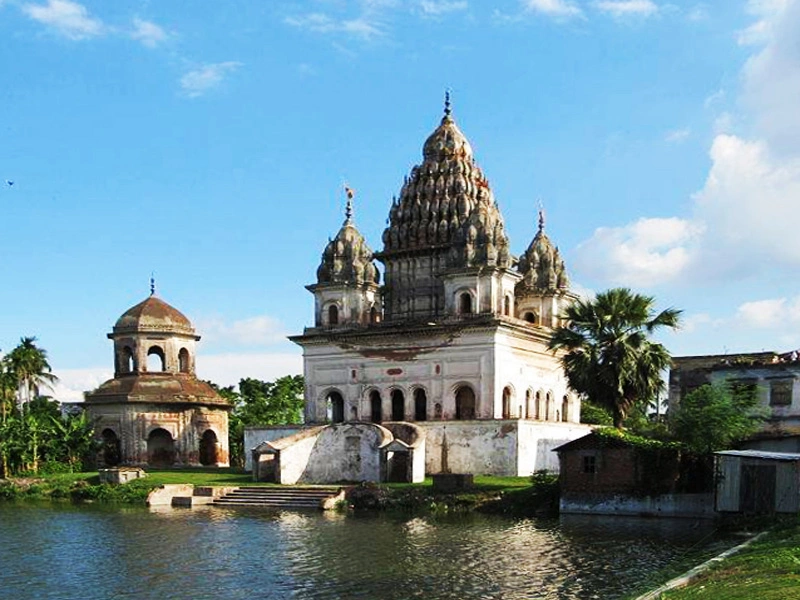
Today is a feast of architecture. In Puthia, towering terracotta temples line the village square: the Shiva Temple with its tall shikhara, and the Govinda Temple, its walls alive with red clay carvings. Nearby, the palace of Rani Bhabani whispers of a mighty queen.
In Natore, her palace grounds continue the story of wealth and philanthropy. Back in Rajshahi, you explore the Varendra Research Museum, packed with Buddhist, Hindu and Islamic artefacts that trace Bengal’s layered past.
Day 13 — Paharpur & Mahasthangarh: UNESCO Heritage
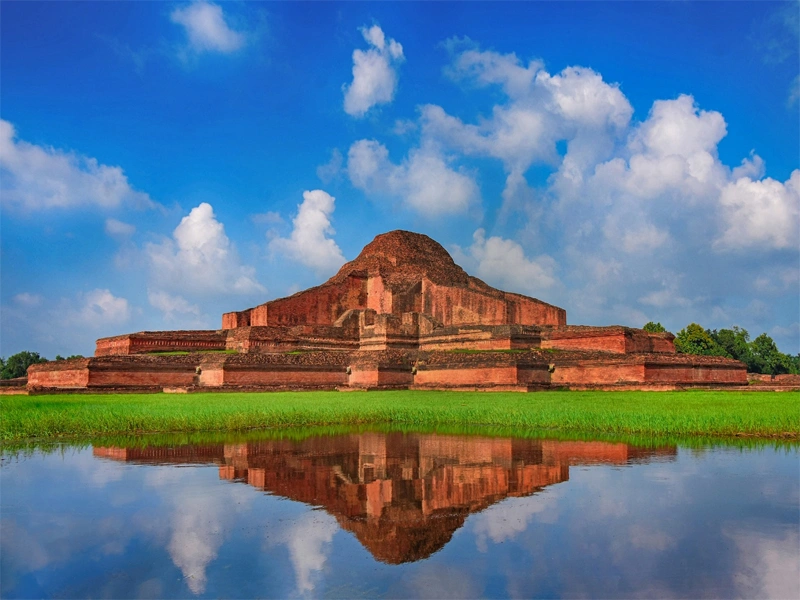
At Somapura Mahavihara, one of the largest Buddhist monasteries of ancient times, brick walls spread across the horizon in a vast square; monks’ cells and prayer halls remain visible after 1,200 years. At Kusumba Mosque, stone replaces brick, carved with rare elegance.
At Mahasthangarh, dating back to the 3rd century BCE, you stand on the ramparts of one of South Asia’s oldest cities. It’s a day of history carved in stone. Overnight in Bogra or nearby.
Day 14 — Life on the Jamuna River
A small boat carries you to a char island — a sandbank born from shifting rivers. Here, farmers grow crops on borrowed land, knowing the next flood could sweep it away. Children chase goats; women thresh rice in courtyards. It’s a raw and real glimpse of resilience — a Bangladesh few travellers ever see. Later, you continue north to Rangpur.
Day 15 — Indigo Blue & Teesta Sunset
In Rangpur, you step into the world of Living Blue, a social enterprise reviving natural indigo dyeing. Hands-on, you dip a cloth into vats, watching it emerge green and turn deep blue as air transforms the fabric. Women show you kantha stitching and talk about fair-trade livelihoods.
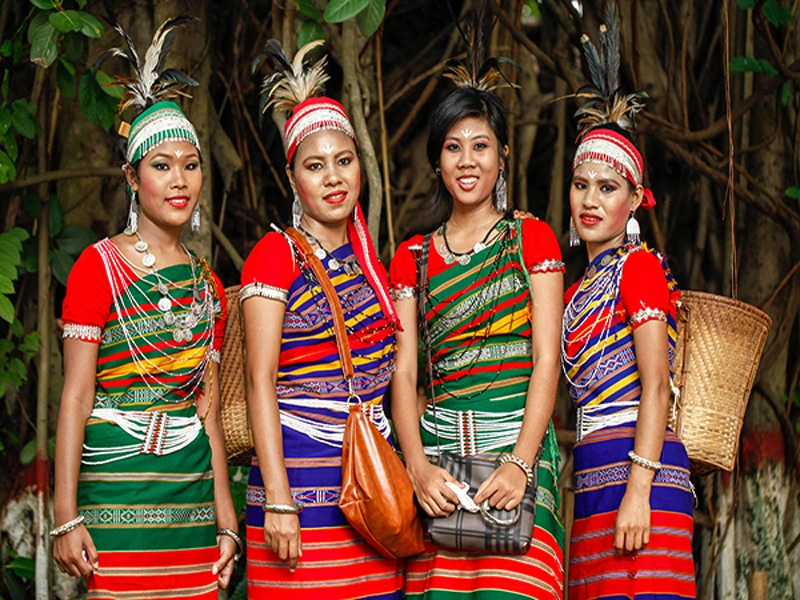
Alternatively, visit a Santal village to experience their way of life, colourful house paintings and an Art Village where mud walls become a living canvas. By evening, you’re at the Teesta Barrage, the river wide and glowing in the last light of day.
Day 16 — Terracotta Splendour of Dinajpur → Fly Dhaka
A colonial palace at Tajhat greets you first, chandeliers glittering above marble halls. Then the highlight: Kantajew Temple, its terracotta walls alive with carvings of gods, dancers, musicians, elephants and battles — the finest example of Bengal’s brick art. Nearby, the small Nayabad Mosque adds charm. From Saidpur, you fly back to Dhaka.
Day 17 — Sonargaon & Panam Nagar
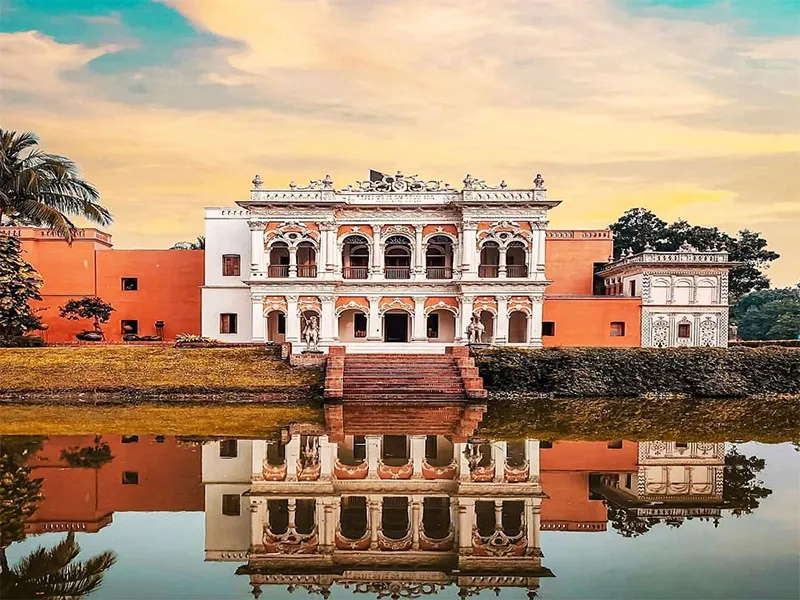
East of Dhaka lies Sonargaon, once the capital of medieval Bengal. Start at the Goaldi Mosque, a rare pre-Mughal relic. At Sardar Bari Palace, now the Folk Art Museum, you admire vibrant crafts and woodwork.
The climax is Panam Nagar — a haunting street of 50 merchant mansions, abandoned yet full of faded grandeur. Finish in a Jamdani weaving village, where artisans create textiles so fine they shimmer like air.
Day 18 — Srimangal Tea Country
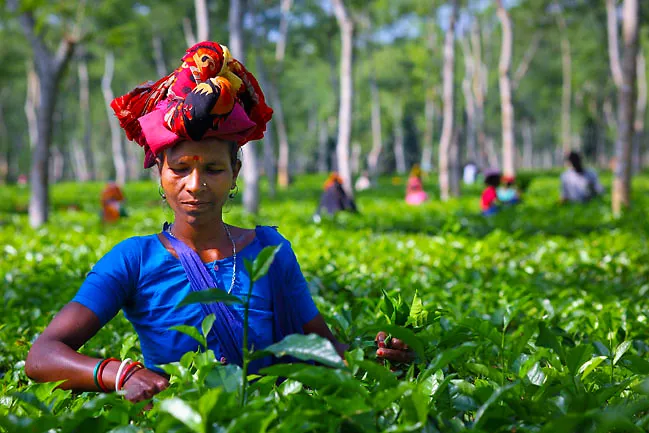
By train, you enter the emerald hills of Srimangal, the Tea Capital of Bangladesh. Tuk-tuks take you through rolling gardens where women pluck leaves into wicker baskets. Pineapple groves and citrus orchards add fragrance to the air. As dusk falls, you sip the iconic seven-layer tea, colours stacked in a single glass.
Day 19 — Rainforest & Wetlands
At dawn, Lawachara National Park wakes to birdsong. With luck, you’ll hear the whoop of Western Hoolock Gibbons swinging through the canopy. Later, you visit nearby villages to learn about local tribal life. In the afternoon, at Baikka Beel wetland sanctuary, flocks of migratory birds wheel across the sky as the sun sets.
Day 20 — Sylhet’s Blue Rivers
You travel north to Sylhet, where the water at Lalakhal shines turquoise under limestone hills. A wooden boat takes you along quiet stretches as fishermen cast nets and children swim from the banks.
In the evening, Sylhet city reveals itself: the colonial Keane Bridge, the lively Surma riverside, and the Sufi shrine of Hazrat Shah Jalal, glowing in lamplight.
Day 21 — Khasi Hills & Night Train
At Jaflong, boulder collectors work in the Piyain River while Khasi women tend betel-leaf gardens on the hills. You visit a Khasi village and hear stories of tradition and change. In the evening, you board the night train south to Chittagong, rocked to sleep by its steady rhythm.
Day 22 — Chittagong & Ship-Breaking Vistas
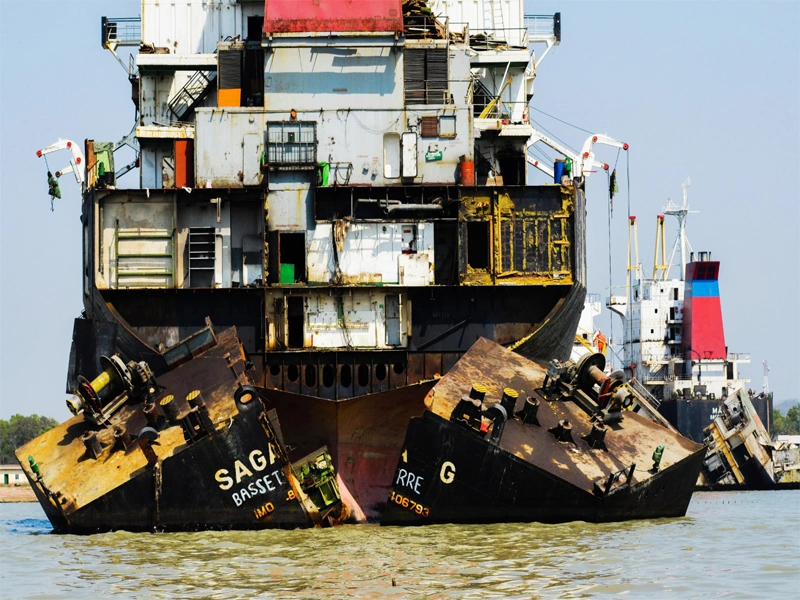
Morning in Chittagong begins at the serene Commonwealth War Cemetery, a quiet contrast to the city’s bustle. From safe, legal viewpoints, you glimpse the dramatic ship-breaking coast, where giant vessels are dismantled along the shore — captured with long lenses and strict respect for safety and ethics. If open, the ethnological museum adds cultural context.
Day 23 — Rangamati & Kaptai Lake
Driving into the hills, you reach Rangamati in the Chittagong Hill Tracts. Kaptai Lake sprawls like an inland sea, dotted with islands and hillside pagodas. By boat, you visit floating gardens and women-run craft stalls that support the Chakma community. Sunset paints the lake copper and pink.
Day 24 — To Bandarban: Hills & Temples
The road climbs higher to Bandarban. At the Golden Temple, gilded stupas gleam against the sky as monks chant softly. From Nilachal’s viewpoint, hills roll away in endless layers, glowing in twilight.
Day 25 — Villages & the Sangu River
Today you visit Marma and Mro villages, where bamboo houses cling to ridges, and women weave on back-strap looms. Encounters are consent-first and respectful. In the afternoon, you float down the rocky Sangu River, Bangladesh’s only hill river, as kingfishers flash ahead and village life unfolds along the banks.
Day 26 — Markets & To Cox’s Bazar
At a bustling tribal market, women sell forest produce and bright handwoven textiles. Then the road unwinds toward the coast. By evening, you’re standing barefoot on Cox’s Bazar Beach, the world’s longest strip of sand, watching waves catch the last light.
Day 27 — Cox’s Bazar: Fish Port & Rohingya Realities
At dawn, the Sea Fish Landing Port erupts into life: trawlers unloading shimmering catch, baskets swinging, gulls diving. Later, subject to permissions, you may visit the Rohingya refugee camps with strict respect for rules and dignity — an encounter focused on understanding, not photography. If access is not granted, we substitute meaningful cultural visits around Cox’s Bazar and nearby dry-fish villages, where families preserve the sea’s bounty under the sun.
Day 28 — Saint Martin Island
From Teknaf, you cruise to Saint Martin, Bangladesh’s only coral island. Coconut palms sway over white beaches, fishermen mend nets, and the air is filled with salt and calm. A local rickshaw or tricycle takes you around sandy lanes; you dip your feet in turquoise shallows and feast on fresh seafood.
Day 29 — Return to Dhaka & Farewell Evening
Flying back to Dhaka, you spend your last full day on curated shopping: Jamdani saris, indigo scarves, handmade crafts, and tea from Srimangal. In the evening, a farewell dinner celebrates your month-long journey with classic Bengali dishes.
Day 30 — Departure
Your driver takes you to the airport. As the plane lifts off, you see rivers braiding across the delta and villages tucked into green fields. You leave with stories, encounters and friendships that will stay with you long after Bangladesh disappears below the clouds.




 Exclusive Dhaka Discovery – Affordable Private Luxury Tour
 From $190 USD total for up to 2 guests
 Add $80 USD per additional guest (max 4 guests)
 Special Offer
 Fair Pricing Promise
 Free Rescheduling & Cancellation
 www.bangladeshunbound.com |
  info@bangladeshunbound.com |
  WhatsApp: +880 1601-652679
 Don’t just see Dhaka—experience it privately, your way.
 Have your own plan or want to do something out of the box?